




Cedar Wood
What Is Cedar Wood? A Homeowner's Guide to Types, Grades and Uses in Landscaping
September 23, 2026
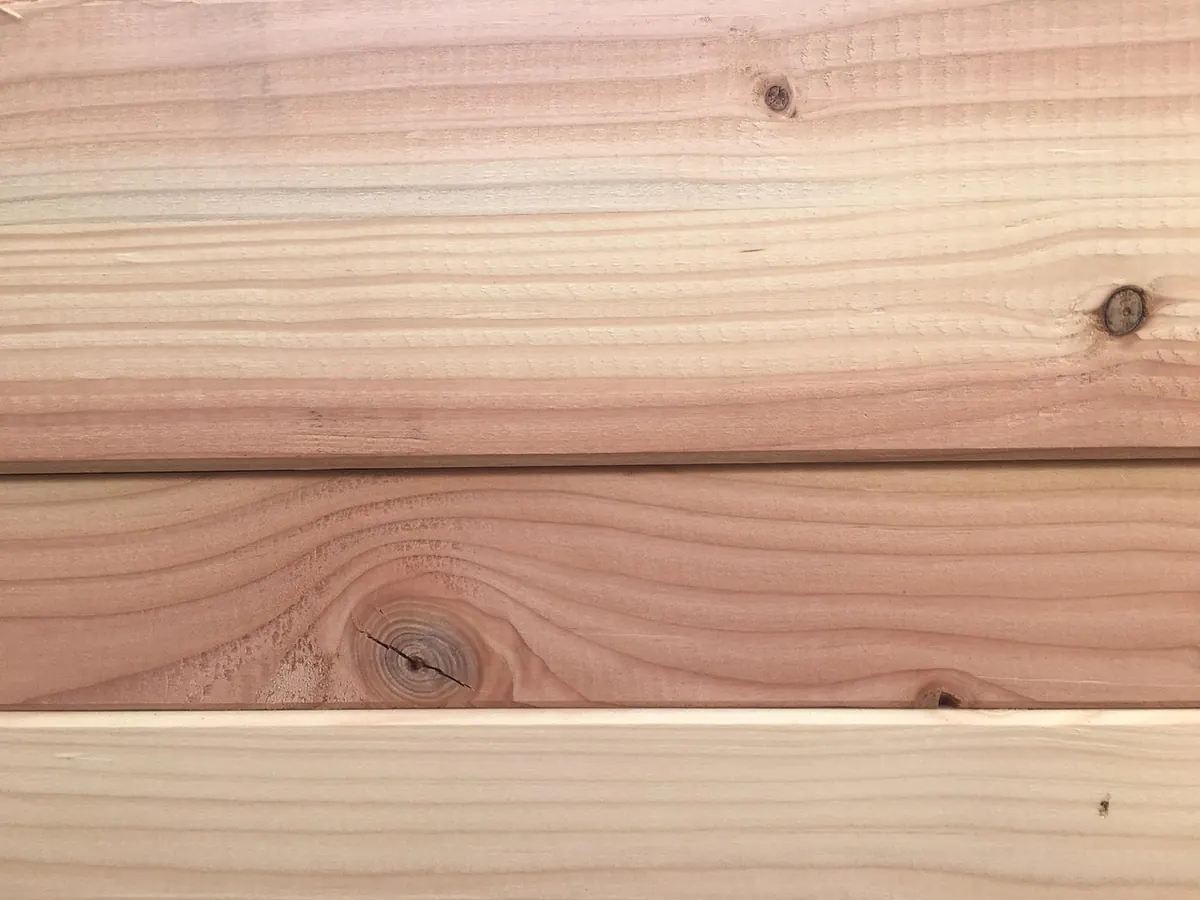
Cedar has a reputation that timber merchants are happy to lean on. It smells wonderful, it weathers gracefully, and in the right form it will still be doing its job long after cheaper softwoods have gone soft and grey. But "cedar" on a shelf label can mean several different woods, with very different strengths and weaknesses.
Knowing which one you're buying — and in what grade — is what separates a screen that looks good for fifteen years from one that sags and rots by year three.
Not One Wood: What "Cedar" Really Means
True cedars belong to the genus Cedrus: the cedar of Lebanon, the Atlas cedar and the deodar. They are magnificent garden trees, and their timber is heavy, aromatic and resinous — but you will rarely see it in a UK timber yard, because these trees are grown for ornament rather than sawmilling.
Almost everything sold as cedar for fencing, cladding and planters is western red cedar (Thuja plicata), a North American conifer that is not a true cedar at all. Japanese cedar (Cryptomeria japonica) appears too, particularly in fencing and cheaper garden joinery. Then there is a cluster of lookalikes — larch, Douglas fir, heat-treated softwoods stained to a cedar colour — that get described as "cedar-like" and priced accordingly.
The practical lesson is simple: ask for the species, ideally the botanical name. It is the only reliable way to know what you are getting.
The Cedar Types You'll Find in UK Gardens
Western red cedar (Thuja plicata)
This is the one worth knowing. It is light for its strength, unusually stable once dry, straight-grained and easy to work with hand tools. The heartwood is a warm mid-brown that fades to silver-grey outdoors, and it holds its shape well in slats, cladding and trellis.
Japanese cedar, or sugi
Softer, lighter and generally more knotty, with less natural resistance than western red cedar. It can be good value for vertical slats and fence panels above ground, but it is a poor choice anywhere the wood stays damp, such as a board in direct soil contact.
True cedars
Occasionally available from UK estate woodlands as sawn boards. Expect strong scent, resinous surfaces, plenty of movement as it dries, and a premium price. Beautiful for a special bench or a small feature; rarely sensible for a whole garden project.
The imposters
Siberian larch is an excellent outdoor timber in its own right, but it behaves differently: denser, more resinous, and it greys to a darker tone. Douglas fir and pressure-treated softwood are also sold alongside cedar. None of these are bad materials — they simply should not be priced as cedar.
Grades Explained Without the Trade Jargon
Grades describe appearance, not durability. A knotty board of western red cedar heartwood will outlast a pristine clear board cut mostly from pale sapwood, every time.
- Clear or select: few knots, long clean faces, consistent colour. The right choice for visible cladding, furniture and front-of-house screens — and the most expensive.
- Character or knotty: knots and small surface checks allowed. Perfectly serviceable for fencing, planters and pergolas, and considerably better value.
- Finger-jointed: short lengths joined with glued interlocking ends to create long, stable boards. Useful for cladding runs; keep the joints clear of the ground.
- Sapwood: the pale strip along the edge of a board. It has little natural resistance, so reject boards with wide sapwood edges for anything outdoors.
Also check that the timber is kiln-dried rather than green — dried boards shrink and twist far less after installation. Avoid bowed or twisted stock, and treat wane (bark left on the edge) as acceptable only for rustic planters. Where you can, look at the boards before they are wrapped and delivered.
Durability: Honest Expectations Outdoors
Western red cedar heartwood is rated as moderately durable, which is good for a softwood but not the same as ground-contact timber. Design around that rather than hoping for the best.
Air movement and drainage matter more than the species label. A screen with a ventilated gap behind the slats will outlast boards nailed tight against a solid panel. A planter raised on feet will outlast one sitting flat on wet paving. Raised beds benefit from a membrane lining the inside and boards kept above the soil line where possible; thick boards drain and last better than thin decorative ones buried in damp soil.
Fixings deserve attention. Cedar contains extractives that corrode ordinary steel, leaving black stains in the wood and rust marks on paving, so use stainless steel or hot-dip galvanised screws. Pre-drill near board ends to avoid splitting. Bear in mind that rainwater running off new cedar can stain pale render or light paving, which is worth planning for if you are fixing a screen against a white wall.
On finish: you can leave cedar to weather to a soft silver-grey, or slow that process with a UV-protective oil or stain, reapplied every year or two. Paint is trickier — cedar's natural oils can prevent adhesion, so a blocking primer is usually needed.
Sustainability and Sourcing
Cedar is not a tropical hardwood, so it does not carry the same rainforest concerns as teak or iroko. Supply still matters, though. Look for FSC or PEFC certification, ask the supplier to confirm chain of custody, and be sceptical of vague green claims on a website.
UK-grown western red cedar comes from a small number of estates and sawmills. It is limited in supply and often wider and more characterful than imported stock, so it is worth asking local sawmills directly. Buy only what you need, and design so individual slats or boards can be replaced without rebuilding the whole structure.
Where Cedar Earns Its Place in a Garden
- Slatted screens and fencing: light enough for slim slats, stable enough to keep even gaps.
- Cladding for sheds and garden rooms: takes stain well and moves little once dry.
- Pergolas and trellis: handsome and manageable in size, though any structure carrying real weight or spanning a distance should be checked by someone competent.
- Planters and raised beds: excellent with a lining and good drainage; lifted off the ground where you can.
- Decking: it looks superb, but cedar is soft and will dent under furniture. Use thicker boards on closely spaced joists and keep the surface ventilated.
- Furniture and play equipment: smooth and less splinter-prone than many softwoods, and light enough to move out of winter weather.
Choosing Cedar: A Practical Checklist
Before you order, write the species and grade on the enquiry, not just "cedar". Specify heartwood with minimal sapwood edges, confirm the timber is kiln-dried, and decide on the finish before installation rather than after the first winter. Use stainless fixings.
If your project is structural — a raised deck, a loaded pergola, a garden building people will use — take advice from a structural engineer or your local building control team rather than relying on a timber yard's opinion. Good cedar in the right place is a joy; good cedar in the wrong place is an expensive lesson.
Photo: fehlthomas / Pixabay
Related posts
More stories you’ll love reading